

Efficiency, time management, and cost control are becoming increasingly important in the agricultural sector. For this reason, choosing the right agricultural machinery not only makes daily operations easier but also directly contributes to a more sustainable and efficient production process in the long term. On the other hand, choosing the wrong machine can lead to both labor loss and unnecessary costs.
So, what should be considered when choosing agricultural machinery? Let us take a closer look at the key points that should be evaluated before making a machinery investment.
1. Clearly Define Your Needs
The first step in choosing agricultural machinery is to accurately analyze the needs of your business. Every field has different characteristics, production models, and usage frequency. Therefore, a single type of machine may not be suitable for everyone.
Before purchasing a machine, the following questions should be answered clearly:
- What crops are being grown?
- What tasks will the machine be used for?
- What is the size of the land?
- How often will the machine be used?
- Is the business small, medium, or large scale?
A machine that does not match the actual need will not deliver the expected performance and may also extend the return on investment period. For this reason, the selection process should begin with a proper needs analysis.
2. Consider the Structure of the Land
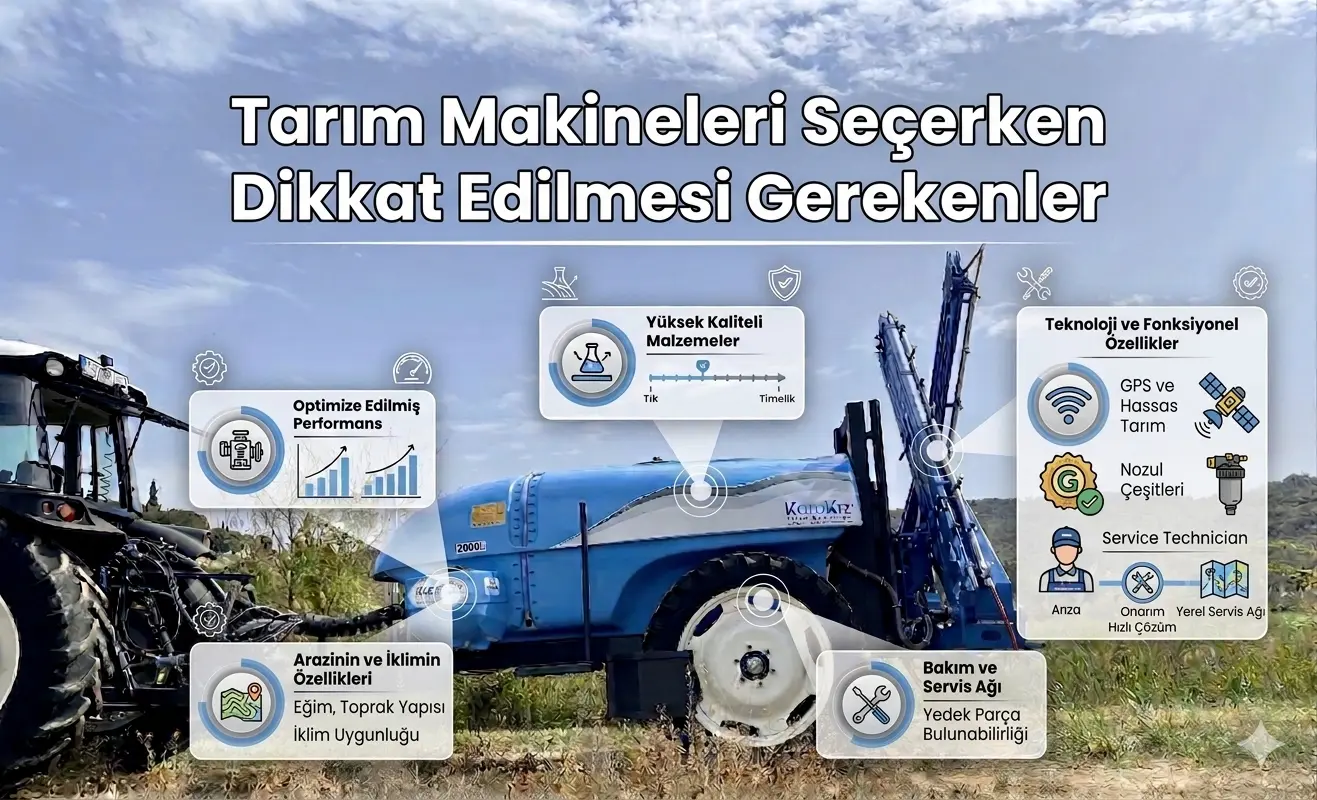
When choosing agricultural machinery, the physical characteristics of the land must be taken into account. Machines with different features perform better on flat, sloped, stony, hard, or soft soil conditions.
Machines that are not suitable for the land structure may cause the following problems:
- Low working performance
- Higher fuel consumption
- Faster wear and tear
- Frequent breakdowns and maintenance needs
For this reason, the technical specifications of the machine should be compatible with the conditions of the area where it will be used.
3. Durability and Material Quality Are Very Important
Agricultural machinery operates under demanding conditions. Factors such as dust, moisture, mud, stony ground, and intensive use directly affect the durability of the machine. Therefore, machines made of high-quality materials and built with a strong body structure should be preferred.
The advantages of quality manufacturing include:
- Longer service life
- Lower maintenance costs
- Reduced risk of breakdowns
- High field performance
Although the initial investment cost may be slightly higher, durable machines provide much more economical results in the long run.
4. Research Spare Parts and Service Support
When purchasing agricultural machinery, it is not enough to focus only on the technical features of the product. After-sales services are just as important as the machine itself. Especially during busy seasons, fast service and easy access to spare parts provide a significant advantage in case of a malfunction.
Brands with strong service support offer the following benefits:
- Reduced work loss
- Shorter waiting times
- Longer and more efficient machine usage
- Greater user confidence
For this reason, the service network, technical support capacity, and spare parts availability should always be examined before making a decision.
5. Prioritize Ease of Use
Machines with complicated operating systems can make the work process more difficult instead of easier. Machines that the operator can use comfortably, with practical settings and easy maintenance procedures, are always more advantageous.
Machinery that offers ease of use provides the following benefits:
- Saves time
- Reduces operator errors
- Speeds up daily workflow
- Lowers training requirements
Especially for frequently used machinery, ergonomics and practical operation are highly important criteria.
6. It Should Save Labor and Time
The right agricultural machine reduces labor needs while increasing the speed of operations. Especially during planting, soil preparation, maintenance, and harvest periods, time-saving machines make production planning more efficient.
The following question should also be answered during the selection process: How much time and labor will this machine save me?
Instead of focusing only on the purchase price, the operational benefits it provides should also be taken into account.
7. Calculate Fuel and Operating Costs
When purchasing machinery, the initial price often stands out first. However, in the long run, the real determining factor is the total cost throughout the usage period. Machines with high fuel consumption, frequent maintenance requirements, or costly spare part replacements may put pressure on the budget.
For this reason, the following factors should always be evaluated:
- Fuel consumption
- Maintenance frequency
- Spare parts cost
- Long-term operating expenses
Machines that offer economical use help shorten the return on investment period.
8. Do Not Overlook Safety Features
Safety in agricultural machinery is a critical issue in terms of user health and operational efficiency. Machines that offer reliable protection features and safe operating conditions should be preferred.
Choosing safe machinery provides the following advantages:
- Reduced risk of work accidents
- Greater operator comfort
- More controlled working processes
For this reason, attention should be paid not only to performance but also to safe design.
9. Evaluate Brand Reliability
There are many agricultural machinery brands on the market with different price ranges and features. However, making the right choice is not only about finding the most affordable product. The manufacturer’s experience in the sector, customer satisfaction, quality standards, and after-sales support should also be taken into consideration.
Choosing a reliable brand provides the following advantages:
- More consistent quality
- A safer investment
- Stronger technical support
- Long-term satisfaction
Therefore, the corporate structure and field experience of the manufacturer should always be reviewed when selecting machinery.
10. View Agricultural Machinery as a Long-Term Investment
Purchasing agricultural machinery is not an everyday expense but a long-term investment. A machine purchased today will remain an important part of the production process for years. Therefore, price, quality, performance, and support services should all be evaluated together.
For the right investment, not only current needs but also future growth plans should be considered. This makes it possible to choose a machine that will contribute to the business for many years.
Why Is Choosing the Right Agricultural Machinery Important?
Choosing the right agricultural machinery:
- increases production efficiency,
- saves time,
- reduces labor requirements,
- lowers breakdown and maintenance costs,
- and provides more profitable long-term use.
For this reason, being careful when selecting agricultural machinery is an important step for the future of the business.
Conclusion
What should be considered when choosing agricultural machinery is not limited to price and appearance alone. Land structure, intended use, durability, service support, ease of use, fuel consumption, and brand reliability should all be evaluated together.
The right machine selection means higher efficiency and lower costs in agricultural production. Therefore, making an informed decision is of great importance both to meet today’s needs and to invest in the future with confidence.
Karakız Tarım Makineleri supports the right machinery selection in agriculture with quality, durable, and efficient solutions that prioritize the needs of producers.